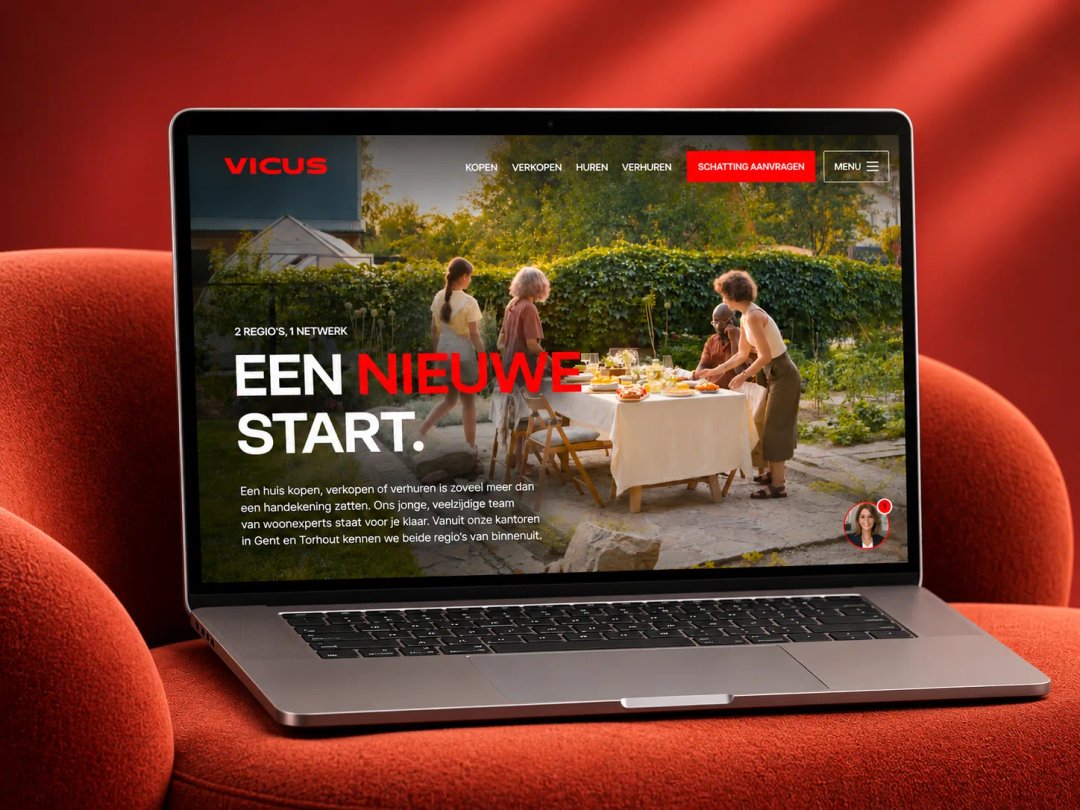
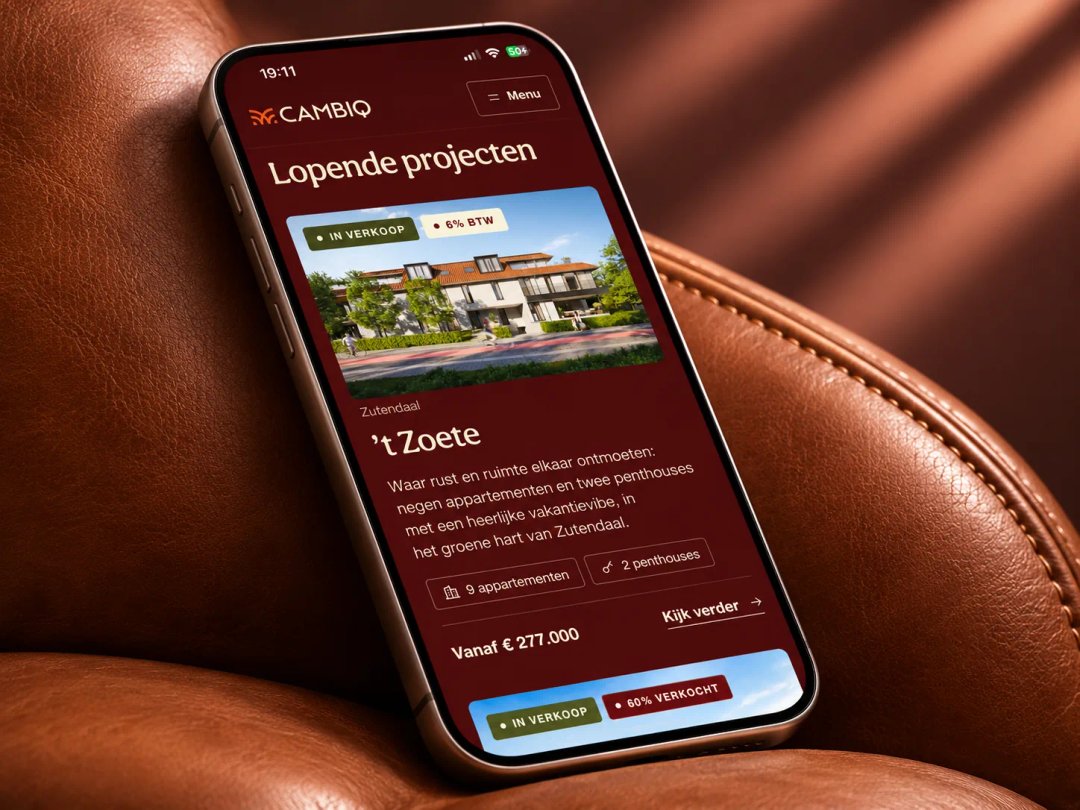
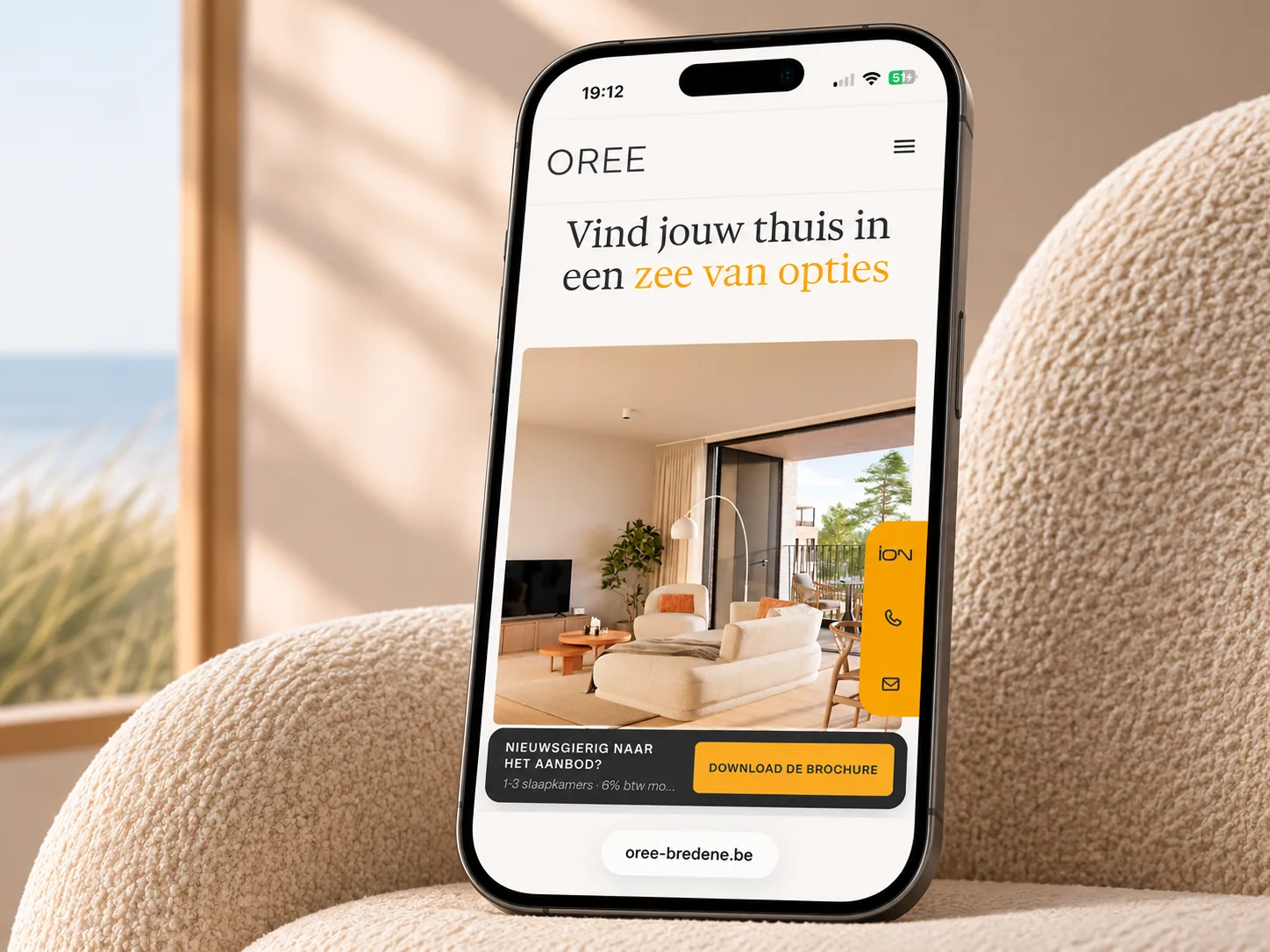
 Wim, Copandi
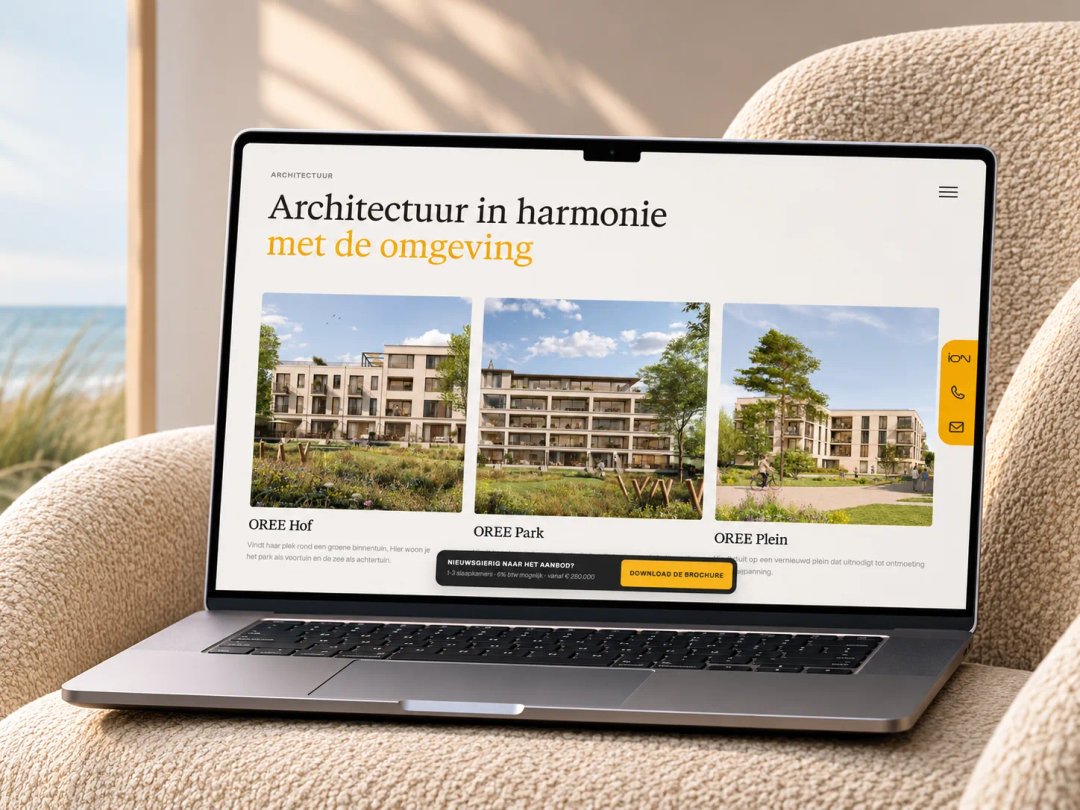
The difference between a project website and a project page
A project page is one page on your agency's or company's website. A project website is a separate site for a single project, with its own address, its own look and one goal.
On a project page, your visitor sees your agency's menu. Other listings, your services, your team, your blog. Every link is a way out. On a project website, everything revolves around that one project. There is nothing else to click.
That difference looks small. For someone hesitating over a purchase of a few hundred thousand euros, it is big.
Why a project website brings in more enquiries
A project website asks one thing of your visitor. As a result, fewer people drop off along the way.
Three things make the difference:
- No distractions. Your visitor stays with the project, from the first photo to the form.
- One funnel. The site tells the story in a fixed order: discover, convince, enquire.
- Its own identity. The project gets a name, a style and images that suit the target group.
For Salamander clients, a separate project website brings up to 60% more leads than a project page inside a larger website.
There is another practical benefit. People see your project on a site board, in an advert or on Immoweb, then search for the project name. A site that is entirely about that project matches what they are looking for. Send your adverts to your project, and visitors land in the right place straight away.
When a project page is enough
A project page on your agency site is enough if the project is small or short-lived. Think of three situations:
- A small project with only a few units.
- A project that is almost sold, where you still need to find one or two buyers.
- A project that already has its own site from the developer. Then you show it on your agency site and link through.
Even with its own project website, the project belongs on your agency site. That is where people who already know you look. The project page then shows the essentials and points to the project website.
What a good project website contains
A good project website gives a prospective buyer everything they need to make an appointment. And nothing more.
| Element | Why it matters |
|---|---|
| First screen with name, image and location | Your visitor knows within seconds what it is about. |
| Overview of the units and their status | Available, under option or sold. You see at once what is still possible. |
| Plans, floor areas and documents | This is what buyers compare and send to their partner. |
| Location and surroundings | Schools, shops, public transport. You sell a new build project on its neighbourhood too. |
| One clear action | An appointment or an enquiry. Every extra field in your form costs you enquiries. |
If you show prices, there are rules on how you state VAT. We cover that in a separate article.
The funnel: from first visit to appointment
A project website that sells follows a fixed order. Each step answers the question your visitor has at that moment.
- Is this for me? The first screen shows the project, the location and the type of homes. Anyone outside the target group knows straight away. Anyone who fits scrolls on.
- What can I get? The unit overview shows what is still available, with plans and floor areas. This is where your visitor compares.
- Can I trust this? Who is building it, when is completion, what does the finish look like. Images of previous projects and a clear schedule help.
- How do I take the next step? One button, one form, as short as possible. Ask only what you need to call back.
Don't put the appointment button only at the bottom. Bring it back on every screen, especially on mobile. Someone who is convinced at step two shouldn't have to go through step three first.
A brochure or price list can be a second action. Stick to that one extra choice. Every action you add weakens the first.
Mobile first
70 to 80% of visitors to a property website use a mobile. A project website must therefore work on a small screen first.
In practice, that means a unit overview you can read with your thumb, plans you can open and zoom into, and a contact button that always stays within reach. Test your project website on your own phone before it goes live.
How your project website and agency site work together
Your agency site and your project website reinforce each other when they run on the same platform. The project is in your agency's listings, the project website does the selling, and every enquiry lands in the same CRM.
With Habbi, Salamander's website platform, it works like this:
- One platform, multiple sites. Each project website is an extra site next to your agency site. That is possible with every package. Read more about multiple sites on one platform.
- Units from your property CRM. The units and their status come from your property CRM. Change something there, and the website follows.
- Its own design per project. Same engine, different bodywork. Every project gets a completely separate design.
An extra site is not included in the package. It costs 50% of your package price, and all of one client's sites run on the same package. On Essential, a project website costs €124 per month, excl. VAT.
When your project website needs to be live
Put your project website online before sales start. The site board, the first adverts and the first Immoweb listing send people to the project name. The site must be there by then.
If you don't have all the information yet, start with a limited version. The project, the location, the type of homes and a form to stay informed. That way you build a list of interested people before the units go on sale. Add to the site once plans and units are fixed.
A website on Habbi is live within 2 to 4 weeks. Include that time in your planning towards the start of sales.
How to tell if your project website works
The most important number is the number of enquiries. Visitors are nice, but a project website exists to bring in appointments.
Also look at where those enquiries come from. Site board, adverts, Immoweb, your agency site: that shows which channel really sells your project, and where your budget pays off most. In Habbi, you follow your leads and your website statistics in one place, next to your properties.
What to do after the project sells out
Don't just let a project website disappear after the sell-out. People have saved, shared or linked to the address.
You have two good options:
- Redirect. You send the address to a page about the project on your agency site or on the developer's site. That way no visitor is lost.
- Keep it online as a reference. The site shows that everything is sold and points to your new projects.
If you redirect, use a permanent redirect (a 301 redirect). That tells Google the page has moved.
As a property developer: brand site and project sites
A developer with several projects benefits from two kinds of sites. One brand site that builds trust, and a project website for each project on sale.
The brand site tells people who you are, what you have already delivered and which projects are coming. That is where a buyer or investor checks whether they can trust you. The project website does one thing: sell that one project.
On Habbi, your brand site and all your project websites run on the same platform. Starting a new project becomes a matter of adding a site, not a new build process. See also our websites for property developers and project websites for new build projects.